
A Firefox Send alternative that’s still running
Mozilla paused Firefox Send in July 2020 after it was abused to distribute malware, and shut it down permanently that September. Six years later people are still searching for a replacement, which is a long time to keep looking for a replacement.
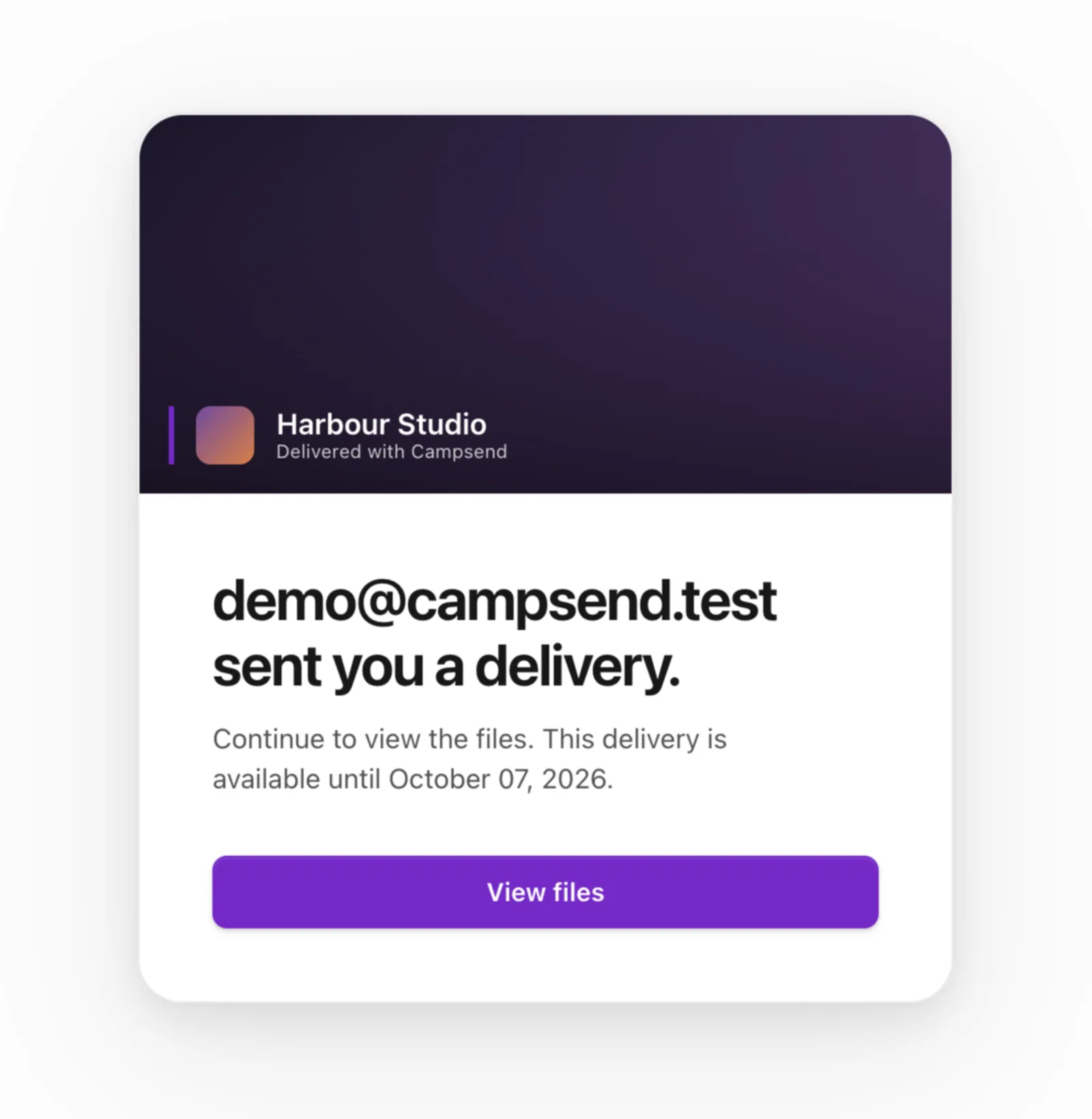
You dropped a file in, got a link, and that link expired on its own. The person receiving it needed no account. There were no folders, no permissions and nothing to file.
Most of what replaced it works the other way round: sign in, upload to a drive, manage who can see it and remember to take it down.
What Firefox Send got right
Three things, and they're why people still look for it.
The link expired on its own. You didn't schedule a cleanup or add a calendar reminder. The link had an end built into it.
The recipient needed nothing. No account, no app, no sign-up wall between them and the file you sent them.
It was open source. You could read it, and you could run it yourself. A lot of Send's audience cared about that specifically, which is why self-hosted forks appeared within weeks of the shutdown.
Campsend keeps all three
Links expire after 30 days without you doing anything, and you can revoke one earlier if you need it gone.
Recipients need no account. The link in the email is all they need, both to download and to send files back if you turn that on.
And Campsend is open source under the MIT license. Run it on one server with your own object storage and your own SMTP service. A self-hosted install has no storage limit and no delivery limit, because plans live in a separate distribution rather than in the code you'd be running. The docs cover it, and the code is on GitHub.
What's different
Campsend isn't a rebuild of Firefox Send, and two differences matter.
The sender needs an account. Send let you upload anonymously. Campsend asks for an email address, sends a sign-in link and ties every delivery to you. Anonymous uploads are what got Send abused, and tying deliveries to an account is what makes the next difference possible.
You find out whether it landed. Campsend records when the delivery was first opened and when a file was first downloaded, and shows both on your Sent page. Send never told you anything after you copied the link.
If you're sending finished work to a client, knowing it landed is most of why you'd want a tool at all.
On encryption
This is the other thing Send is remembered for, so it deserves a straight answer.
Firefox Send encrypted files in the browser, so Mozilla couldn't read them. Campsend doesn't do that. Files are encrypted in transit and at rest, and Campsend can read them, the same as Dropbox or Google Drive can.
If end-to-end encryption is what you need, Campsend is the wrong tool. If what you want is that nobody but you holds the files, run Campsend yourself against your own bucket. That's a different guarantee, and it's a real one.
The shape of it
Files, a note, one email address and a link that expires. That's most of the product.
The free plan is 15 deliveries a month and 5 GB of storage, tracking included.
If you landed on Firefox Send from WeTransfer rather than the other way round, Campsend against WeTransfer is the closer comparison.